Start below the photograph
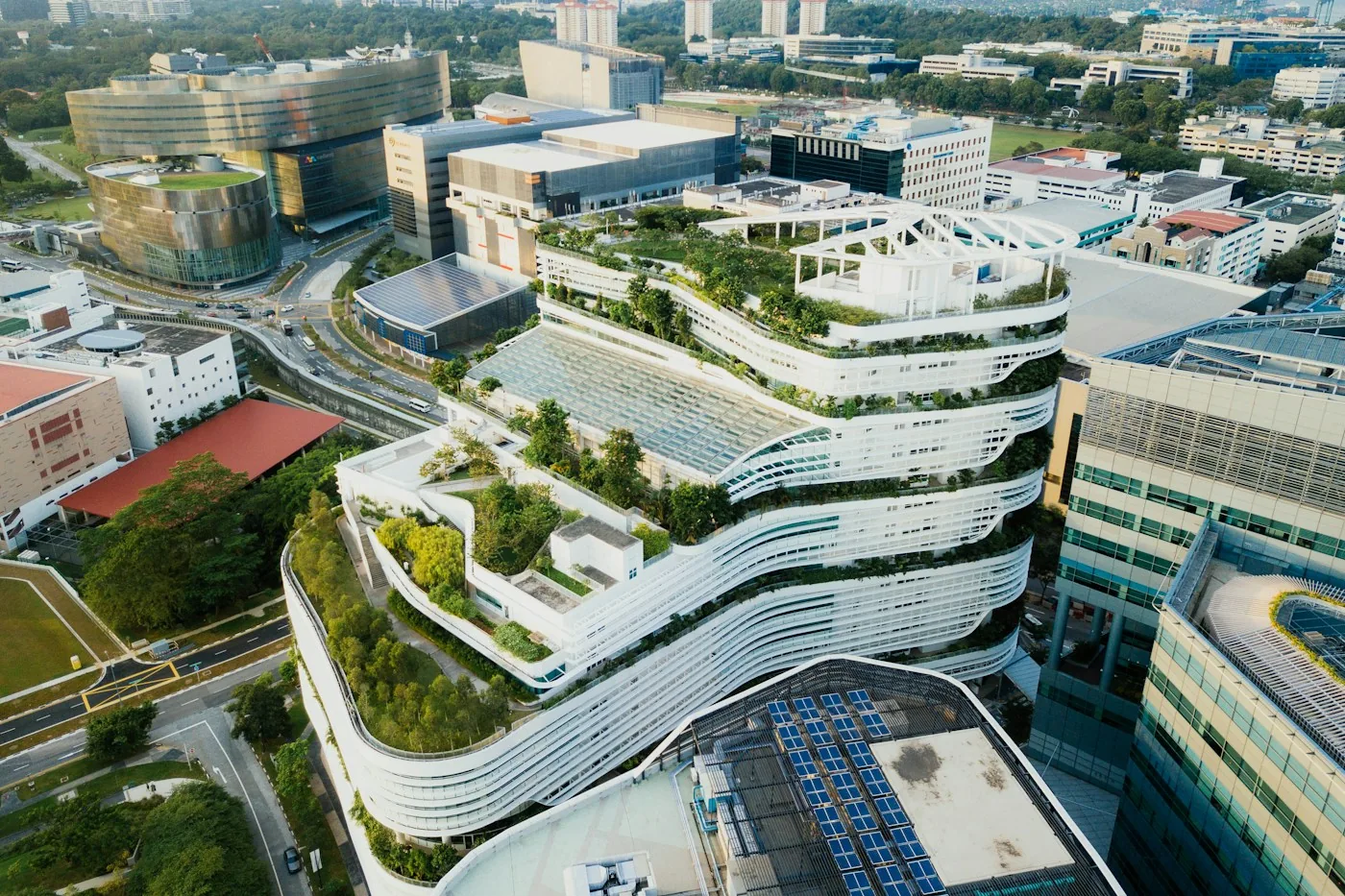
A roof covered in plants makes an immediately appealing image. The EPA's green-roof guidance explains a more layered design, including vegetation, growing medium, drainage, and barriers that protect the building from water and roots. A green roof is therefore more than an ordinary garden moved upward.
The hidden layers are central to the story. They connect the appearance of greenery with the practical question of how the roof works. Looking for those layers helps turn a promotional photograph into a system that can be described and assessed.
Not every green roof is a rooftop park
The EPA distinguishes simpler extensive roofs from more intensive designs that may resemble accessible gardens or parks. The types differ in their support and maintenance needs. Public access should therefore not be assumed merely because an aerial photograph shows a green surface.
The agency describes potential roles in shading, cooling, and stormwater management, while emphasizing that design and conditions matter. A single headline benefit should not become a promise for every building. Ask which outcome the specific project was designed to achieve and how that outcome is being evaluated.
Read a project as a set of responsibilities
For an existing public project, look for information about who owns it, who maintains it, and whether visitors are permitted. These ordinary details are part of understanding the design, not distractions from it. A beautiful opening-day photograph does not show the full life of an installation. A maintenance contact also gives readers somewhere concrete to direct a practical question.
If you are only exploring the idea, an official case study is a better first step than trying to copy a picture. Building work needs qualified assessment of the particular structure and setting. The useful reader's task is to understand the questions before turning the concept into a construction decision.
Notice what a good case study includes
A strong explanation identifies the building, the kind of roof, its intended purpose, and the period over which any results were observed. It should also make maintenance visible. If those details are absent, keep them as unanswered questions rather than assuming the plants take care of everything.
Green roofs offer an especially clear lesson in how we read environmental design. The most visible feature attracts attention, while the least visible components make the arrangement possible. Learning to ask about both gives the image more meaning. Instead of simply seeing a roof turned green, you see a relationship among a building, water, plants, and ongoing care. That is a richer story, and one that can be followed after the novelty of the photograph has passed.
Sources & further reading
Source links provide context for this original feature. Illustration is not documentary evidence of a specific event.