Begin with a shaped blade
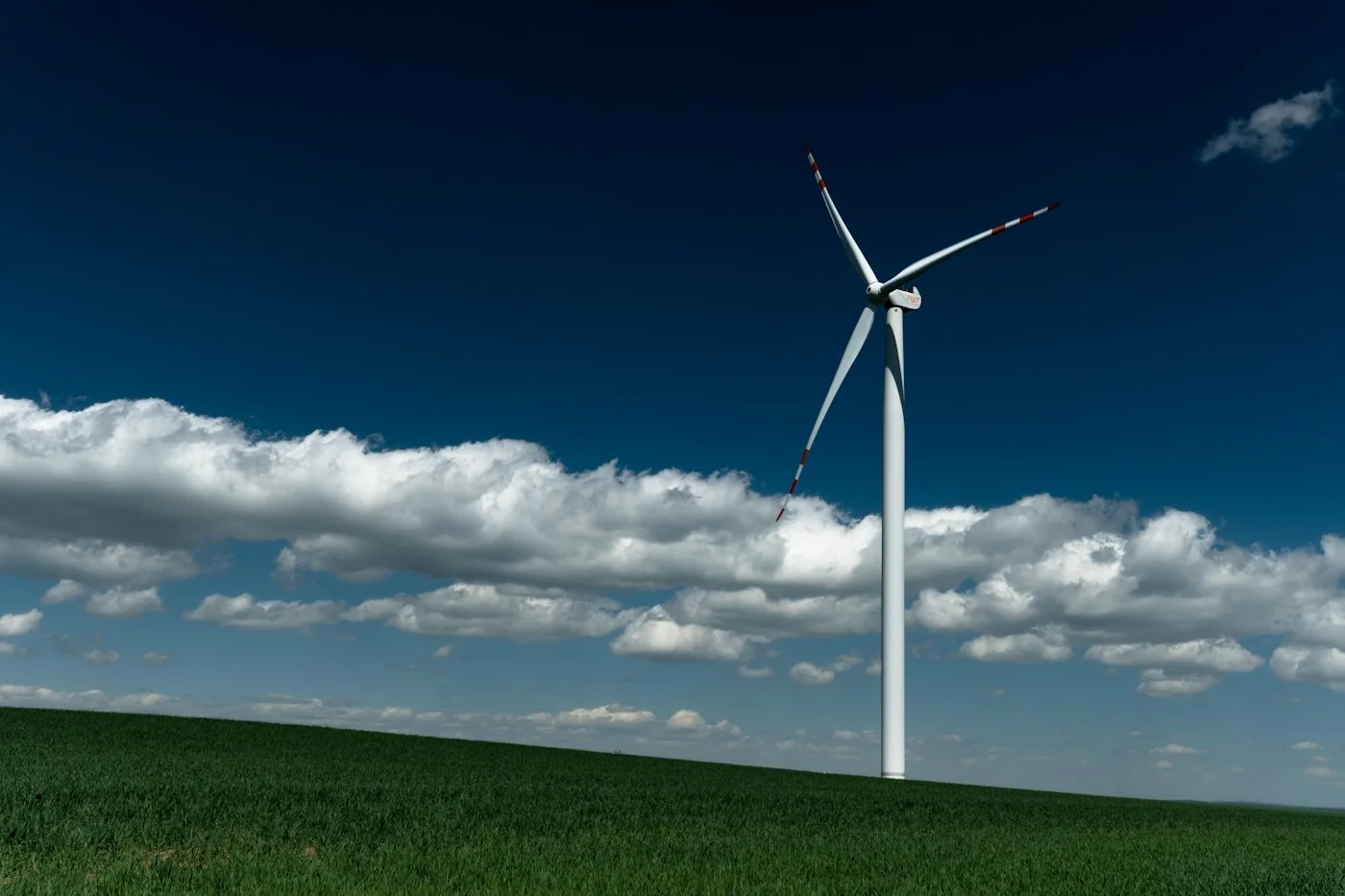
A wind turbine is not simply a wheel being pushed by the weather. The US Department of Energy explains that its blades use aerodynamic forces, with pressure differences producing lift and turning the rotor. That motion is connected to a generator, directly or through a drivetrain, to produce electricity.
The silhouette is therefore a useful starting point rather than a complete explanation. The blade shape, moving parts, and electrical equipment each have a role. Looking at the machine as a sequence of energy transfers makes it easier to understand than treating the spinning rotor as the whole power plant.
Wind belongs to a larger weather story
The Department of Energy links wind to uneven solar heating, the Earth's surface, and the planet's rotation. A turbine makes use of an existing movement in the atmosphere; it does not create that movement. This connects the machine in the field with a much larger physical setting.
That connection also explains why a photograph is a limited account of a project. A few turning blades tell you what was visible at that moment, not a complete record of the site's output. A still image and a performance report answer different questions.
Read a project description carefully
When learning about a wind installation, separate the project's description from its measured operation. What does the document actually say: the number of turbines, a stated capacity, a period of generation, or an expected result? Keep the units and the time period with the number rather than copying the number by itself.
This is a useful reading habit for any energy story. An impressive figure becomes much easier to understand when you know whether it describes a machine's specification, an observation over time, or an estimate about the future. Those categories should not silently replace one another.
Observe without turning a view into evidence
From a permitted public viewpoint, notice the spacing of turbines, the direction of their rotors, and the surrounding terrain. Describe what you can see without deciding why every machine is behaving differently. A local project resource may explain the setting better than a guess from a distant photograph.
The most useful result of the exercise is often a better question. Why was this site chosen? How is output reported? Which part of the installation is visible and which part is outside the frame? Understanding a turbine begins with a blade, but understanding a project includes the place and the record of its operation. Keeping those scales separate lets the familiar landscape become more informative without asking a casual observer to stand in for an engineer.
Sources & further reading
Source links provide context for this original feature. Illustration is not documentary evidence of a specific event.