More than a river mouth
An estuary is a place where river water meets the sea, creating a changing mixture of fresh and salty water. NOAA Fisheries describes these environments as important habitats for many animals during early stages of their lives. Marshes, mangroves, seagrass beds, and other settings can be part of an estuarine landscape.
The boundary is therefore not an empty gap between land and ocean. It is a place with its own conditions and relationships. What arrives from upstream and what happens at the coast both belong to its story.
Read the landscape in layers
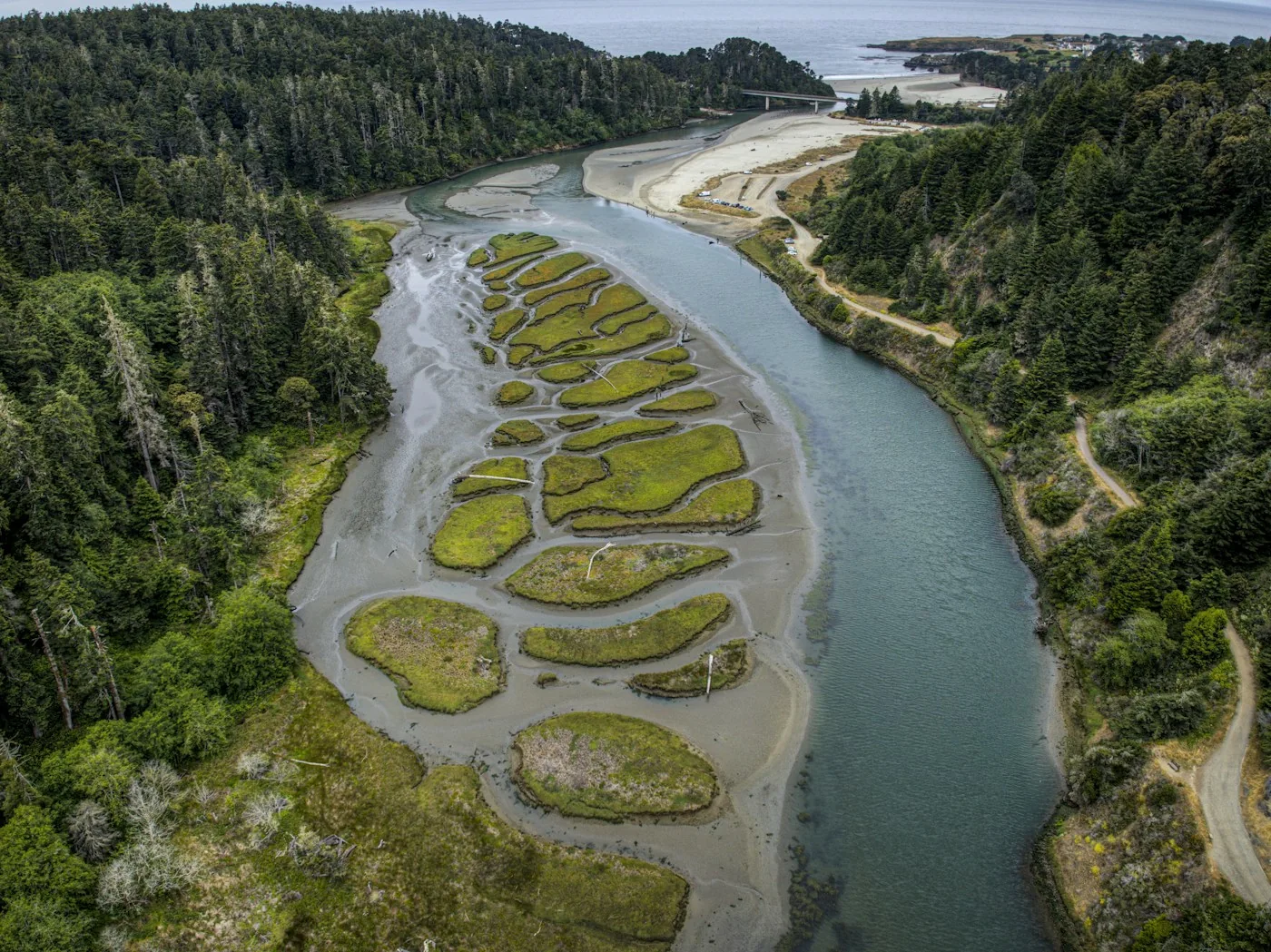
From a public viewpoint, an estuary may look like a broad, quiet expanse. Try separating it into visible parts: open water, exposed mud, planted edges, channels, and nearby buildings or roads. A quick sketch can reveal much more variety than the first impression suggests.
Keep uncertainty visible in the sketch. You may not know which areas are reached by the tide or how a channel connects beyond the view. Mark those as questions rather than filling them with guessed explanations. A modest map can still be a very good record of attention.
A useful place to ask upstream questions
NOAA notes that estuaries are sensitive to influences from both the ocean and the land, including runoff and changing flows. That makes them a helpful setting for thinking about connection. A story about a coastal habitat may also involve decisions made well inland.
When reading such a report, trace the place names rather than focusing only on the final shoreline. Which river is involved? Which area drains toward it? Does the article distinguish a local event from a wider trend? Those questions help turn an attractive coastal image into a more complete geographical account.
Visit with a changing scene in mind
Use official access information and tide guidance when planning a visit. Choose a public path or viewing area and let the landscape come to you instead of trying to reach every exposed patch. If you return on another day, repeat the same view and compare what is visible.
The comparison need not become a claim about environmental change. Differences in a casual visit may have several explanations, and recording the time and conditions preserves that context. The reward is a deeper familiarity with the place. A muddy edge becomes a channel; an apparently uniform marsh becomes a pattern of water and vegetation. Estuaries are particularly good reminders that a landscape can be both a meeting point and a place in its own right, with activity that becomes clearer when we stop treating the boundary as a blank.
Sources & further reading
Source links provide context for this original feature. Illustration is not documentary evidence of a specific event.