Look past the postcard
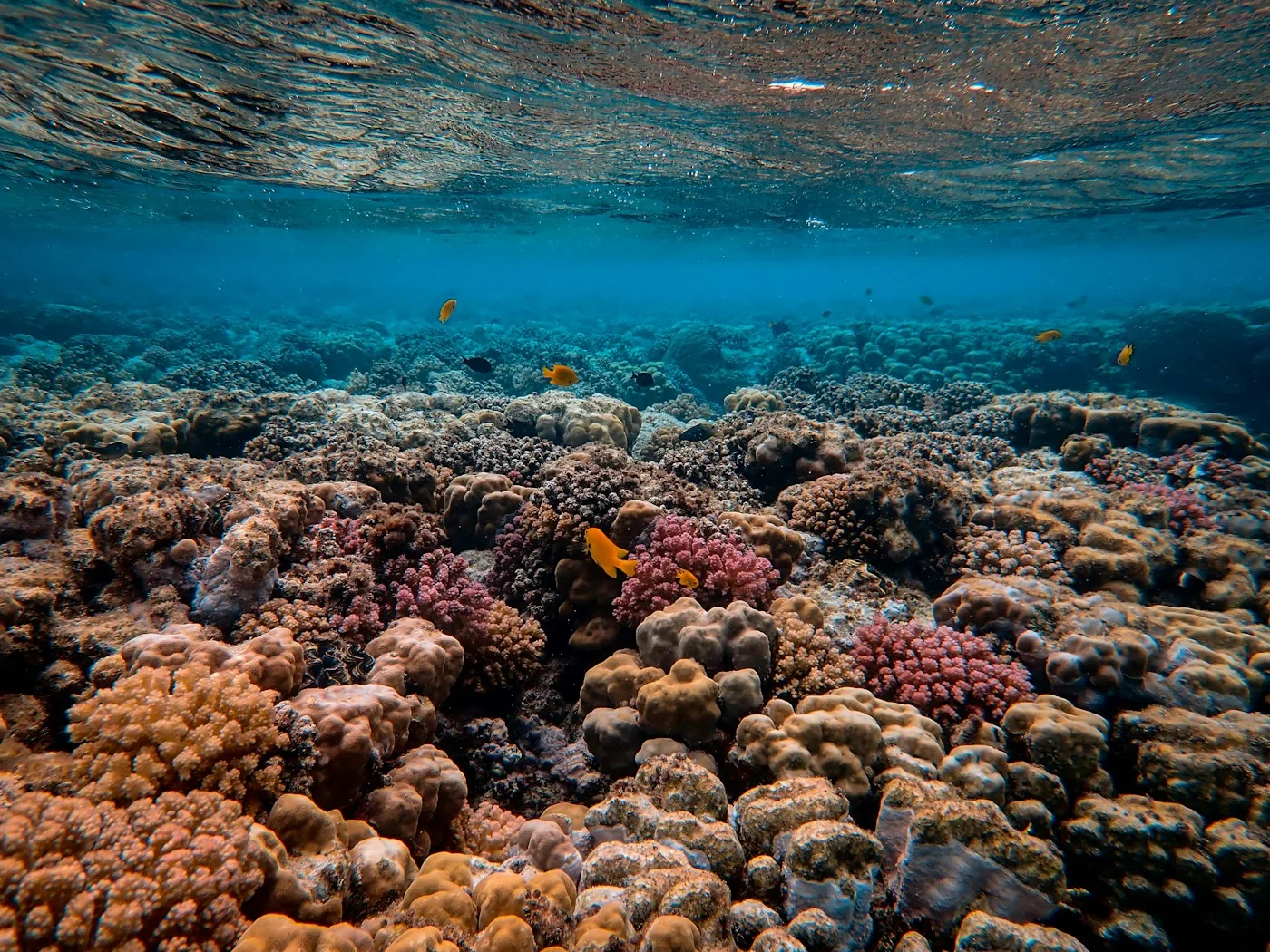
A reef photograph invites attention to bright color and clear water. The more interesting story is the variety of organisms sharing the space. NOAA lists fish, corals, lobsters, clams, seahorses, sponges, and sea turtles among the creatures associated with reef environments. It also describes reefs as places with a long natural and cultural history.
Thinking of a reef as a neighborhood changes the questions you ask. Instead of looking only for its most colorful resident, you begin to notice shelter, gaps, edges, and the many ways the scene may be occupied.
Scale changes what you notice
Take a reef image and view it first as a whole, then in sections. At the broadest scale, describe the shapes: ridges, patches, open sand, branching forms, or steep surfaces. At a closer scale, look for separate animals and the spaces around them. Avoid identifying a species merely because its color resembles something you remember.
This is an exercise in attention, not a substitute for a field guide. It helps separate what a picture clearly shows from what you would need an expert or a reliable identification resource to establish.
Ask what the photograph cannot answer
A beautiful image does not tell you everything about a reef's condition, age, or changes over time. To understand a news report, look for where the observations were made, when they were made, and which measurements support the account. One scene should not automatically stand for every reef in an ocean basin.
The same care applies to before-and-after pictures. Check whether they show the same location and whether the surrounding explanation describes a method for comparison. Asking for context makes a striking picture more informative without diminishing its power to attract attention.
Make a visit a learning opportunity
If you plan a reef visit, read the destination's official guidance and the operator's environmental instructions before going. Ask what the experience is designed to teach and how visitors are expected to behave around the habitat. A clear explanation is more useful than a vague promise of an untouched paradise.
You can also learn from shore-based interpretation, museum material, or a carefully documented virtual visit. The value lies in understanding relationships rather than collecting the most dramatic encounter. The neighborhood idea offers a useful starting point: every view is a small part of a larger place, and the place has a history that a visitor sees only briefly. Looking with that awareness turns a reef from scenery into a subject worth following long after the photograph is taken.
Sources & further reading
Source links provide context for this original feature. Illustration is not documentary evidence of a specific event.