Brightness is not the only kind of detail
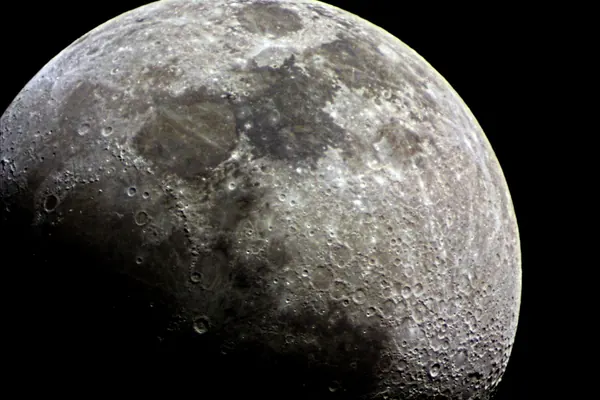
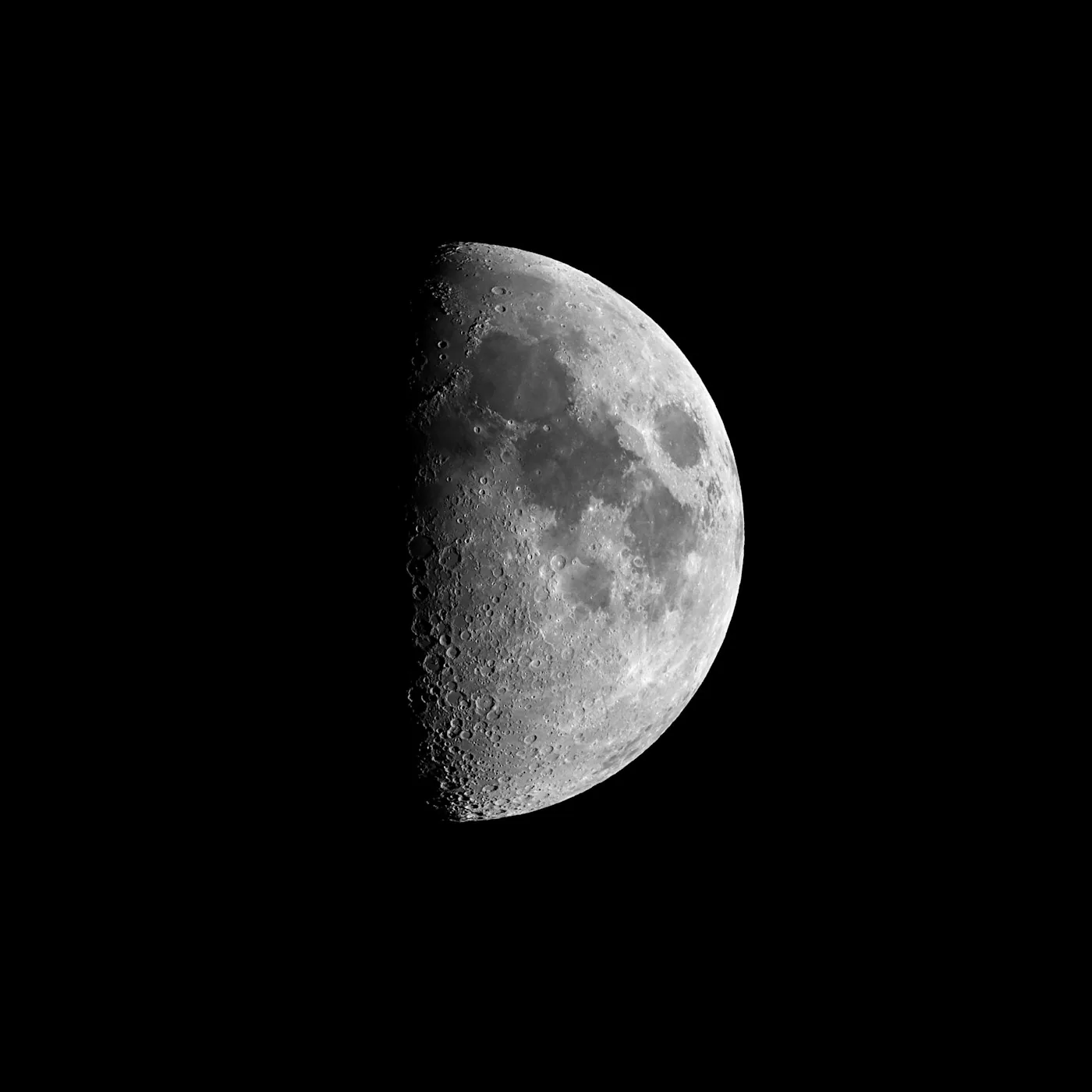
The full Moon is an obvious event, but it is not automatically the most revealing view of lunar terrain. NASA's observing guidance recommends looking at phases other than full when studying craters and mountains. The shadows help separate features that can be less obvious under more direct illumination.
This is an accessible example of a broader visual principle: stronger overall brightness is not the same as more useful contrast. The boundary between lunar day and night, called the terminator, can draw attention to the shape of the surface through its long shadows.
Begin with the whole disk
You do not need to identify every crater on your first look. Start by describing the broad light and dark areas and noticing which parts seem smooth, textured, or difficult to separate. NASA explains that the familiar darker areas, called maria, are associated with ancient volcanic lava flows.
A lunar map can give names to what you notice, but there is no need to turn the first session into a test. Let the observation lead to the label. A feature becomes easier to remember when you have first found it for yourself rather than merely read its name in a list.
Repeat a small observing task
Choose one visible region and sketch it on more than one evening when conditions permit. Write down which side of the feature appears shadowed and what you can distinguish. If using equipment, follow its instructions and never point binoculars or a telescope at the Sun without appropriate specialist solar equipment and guidance.
A stable, comfortable viewing position matters more than trying to see everything at once. Keep the session short enough to remain enjoyable. A few clear notes about one region can be more useful than a crowded drawing whose marks you cannot interpret the next day.
Let a familiar object surprise you
The Moon is unusually well suited to repeated attention because it is both recognizable and changing. You can return to the same broad surface pattern while the lighting makes different details stand out. That creates a natural reason to look again rather than assume the first clear night has exhausted the subject.
Compare your notes with NASA's viewing guide after the session. Which features were easier than expected? Which remained uncertain? An honest observation can include both. The goal is not to compete with spacecraft imagery. It is to understand what your own eyes and equipment can reveal. A partly lit Moon offers an everyday lesson in how shape becomes visible: sometimes the most informative part of a view is the shadow, and the most useful moment is one that looks less spectacular on a calendar.
Sources & further reading
Source links provide context for this original feature. Illustration is not documentary evidence of a specific event.