The last stretch of a long journey
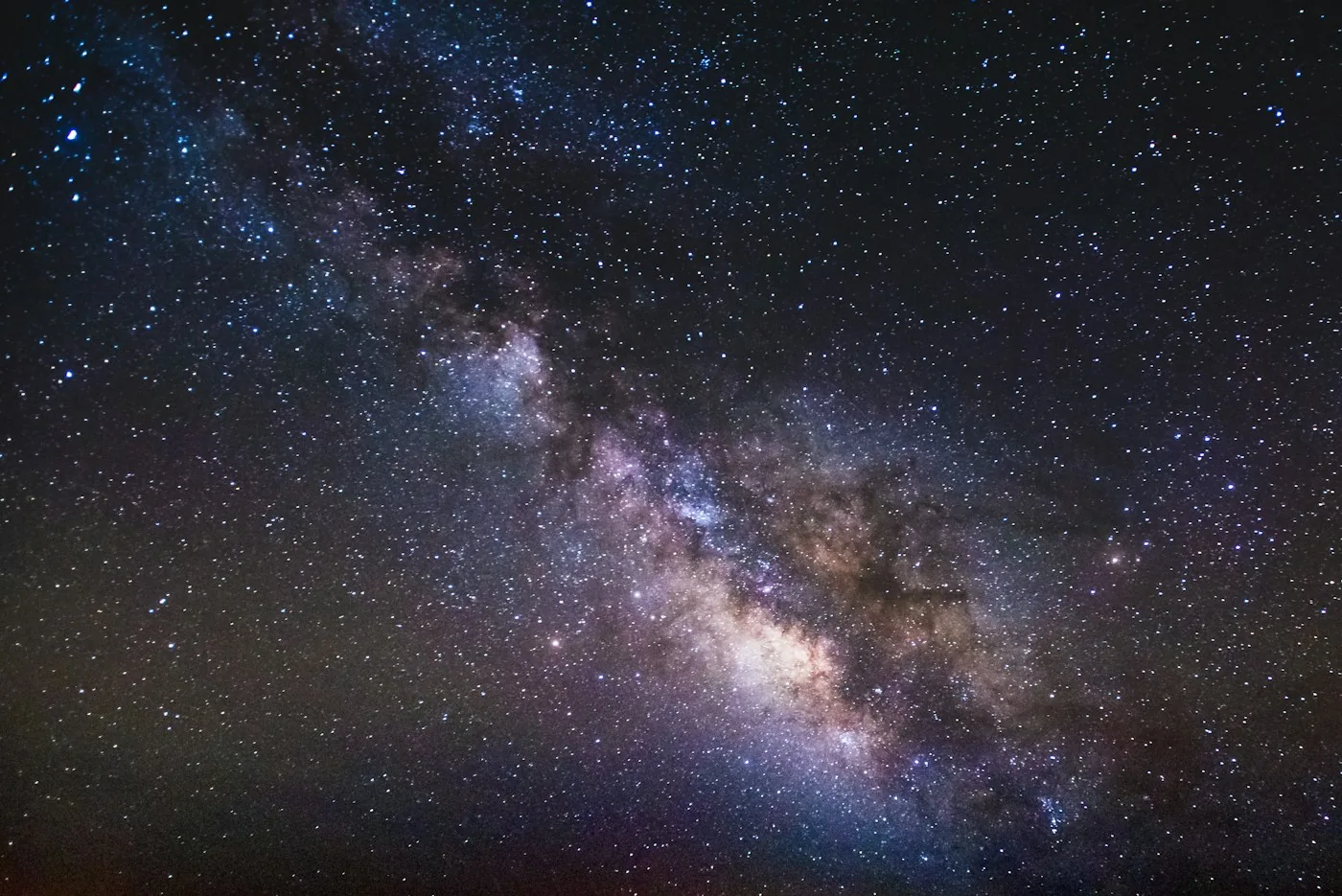
Starlight travels an enormous distance before reaching us, but the flicker we notice can arise in the final passage through Earth's atmosphere. NASA defines astronomical scintillation as twinkling produced as light passes through small variations in air density in a turbulent atmosphere. The effect is generally stronger near the horizon, where the light crosses more air along its route.
That explanation shifts the question from what the star is doing to what is happening between the star and the observer. A distant-looking phenomenon can contain information about a much nearer medium.
Look at height before making a comparison
If two bright points seem to flicker differently, note their positions in the sky before drawing a conclusion. One may be much lower than the other. The comparison needs context rather than a quick decision that one object must be behaving unusually.
A star chart or trusted astronomy resource can help establish what you are looking at. Avoid relying on twinkling alone as an identification method. The useful observation is a description of the view; identifying the object is a separate task that deserves its own information.
Make a short evening record
On a clear evening, find a comfortable public or private place where you can remain safely still. Choose a bright star that you have identified with a reliable chart. Describe how steady it appears and how high above the horizon it is. Repeat with another identified star if the view allows.
Keep the notes modest. Words such as steady, gently flickering, or difficult to judge are enough. Record uncertainty rather than forcing a difference. You are learning how to observe a subtle effect, and an honest unsure is more valuable than an impressive claim made from a few seconds of looking.
Seeing is part of the instrument
The atmosphere is easy to forget when we talk about a night view. We describe a telescope or camera carefully, yet the light must also pass through air before reaching most equipment on the ground. Remembering that path helps explain why a clear-looking sky is not the only consideration in an observing session.
The idea also transfers beyond astronomy. A view across hot pavement, a scene through a window, or a photograph made through haze each includes a medium between the subject and the observer. Asking about that medium can reveal why the image differs from expectation. A twinkling star is a particularly beautiful reminder: what we see is shaped both by the object and by the journey its light takes before arriving here.
Sources & further reading
Source links provide context for this original feature. Illustration is not documentary evidence of a specific event.