Begin with the water itself
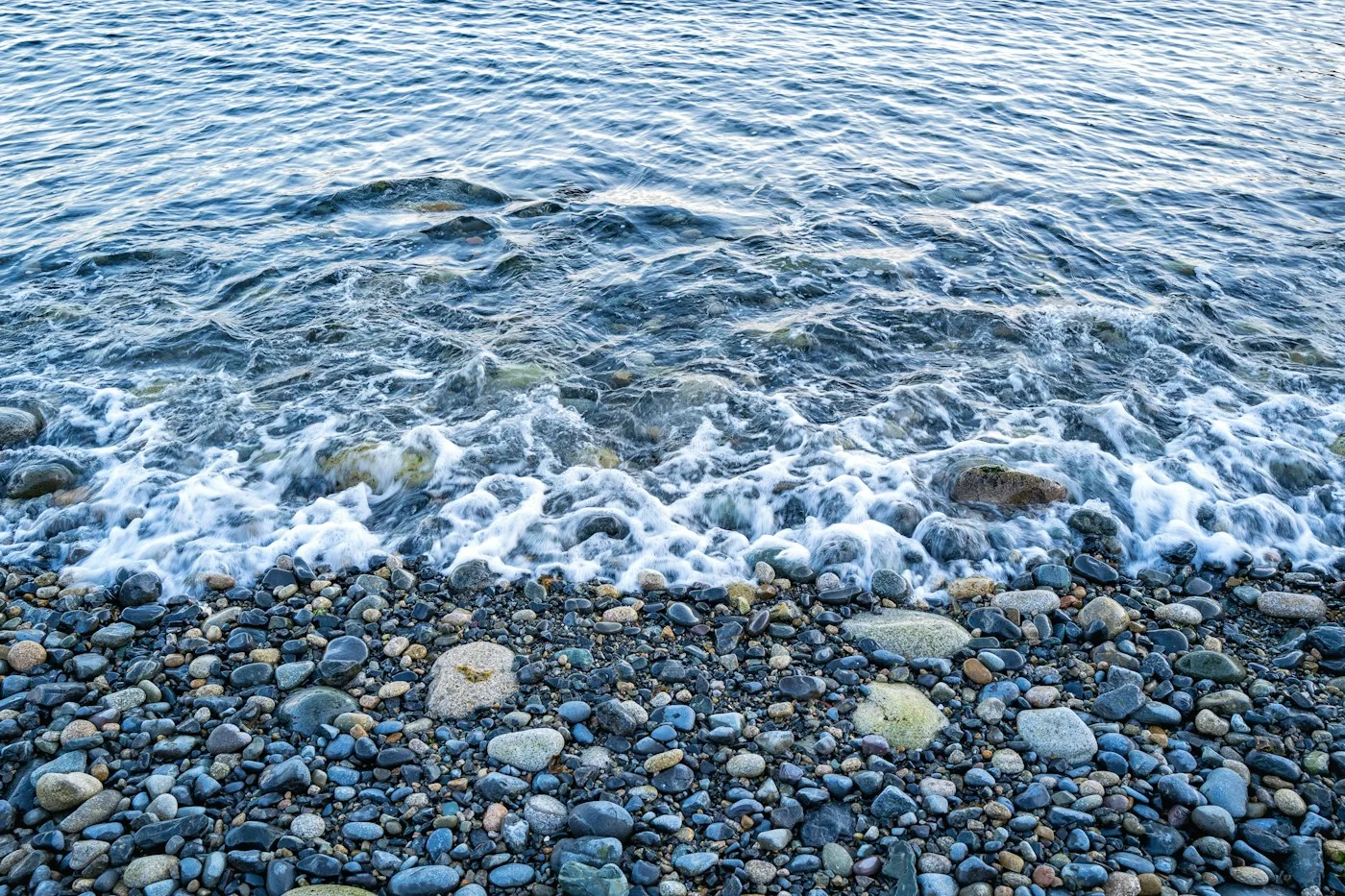
A blue ocean beneath a blue sky seems to offer its own explanation: surely the water is simply acting as a mirror. Reflection is part of many waterside views, but it does not tell the whole story. NOAA describes the ocean as a filter for sunlight. Water absorbs colors toward the red part of the visible spectrum, leaving more blue available for us to see.
That explanation gives the sea a role beyond reflecting whatever happens overhead. Light entering the water changes as it travels, so the color is connected to the water column as well as its surface.
A coastline has a broader palette
The sea can also look green, brown, or other colors because suspended particles and sediments affect the light. That does not mean a single photograph is enough to identify what is present or whether the water is safe. The broad lesson is that the ocean's appearance has several contributors.
Think of a coastal view as a combination rather than a paint swatch. The water, its contents, its surface, the light, and the position of the observer all belong in the question. A striking shade can suggest something worth investigating without providing a diagnosis on its own.
Compare views without making claims
On a coastal walk, choose two safe viewpoints of the same area. At each one, note which parts look blue, pale, dark, or opaque. Look for differences between sheltered water and open water without trying to explain every patch. Record the time and weather beside your description.
If you photograph the scene, keep an unedited copy. A heavily adjusted image may be beautiful, but it is a different kind of record. Comparing your notes with the untouched photograph can be a useful reminder that a camera, too, makes choices about the appearance of color.
Look beyond a color label
A better description than simply blue might be a dark band beyond the rocks, a pale strip close to shore, and a bright reflective patch near the horizon. The extra detail does not require scientific vocabulary. It only requires paying attention to where one impression changes into another.
That habit is valuable when reading environmental stories. Ask what was actually measured and what was merely visible. A water sample, a satellite analysis, and a visitor's photograph can each contribute something different. Treating them as interchangeable loses information. The familiar color of the sea is a good place to practice that distinction: something can be visually obvious and still need a careful explanation of its cause.
Sources & further reading
Source links provide context for this original feature. Illustration is not documentary evidence of a specific event.