An event rather than an object
A rainbow looks solid enough to belong to a distant hill, but it is an optical effect. Sunlight enters suspended water droplets, bends, reflects inside them, and bends again as it leaves. Different wavelengths take different paths, separating the light into colors. NOAA explains that the geometry must also work for the observer: sunlight generally comes from behind the person looking toward the droplets.
This makes the familiar search for the rainbow's end a wonderfully impossible errand. The view depends on where you are standing, rather than on a colored ribbon attached to a particular field.
Why the arc can have a companion
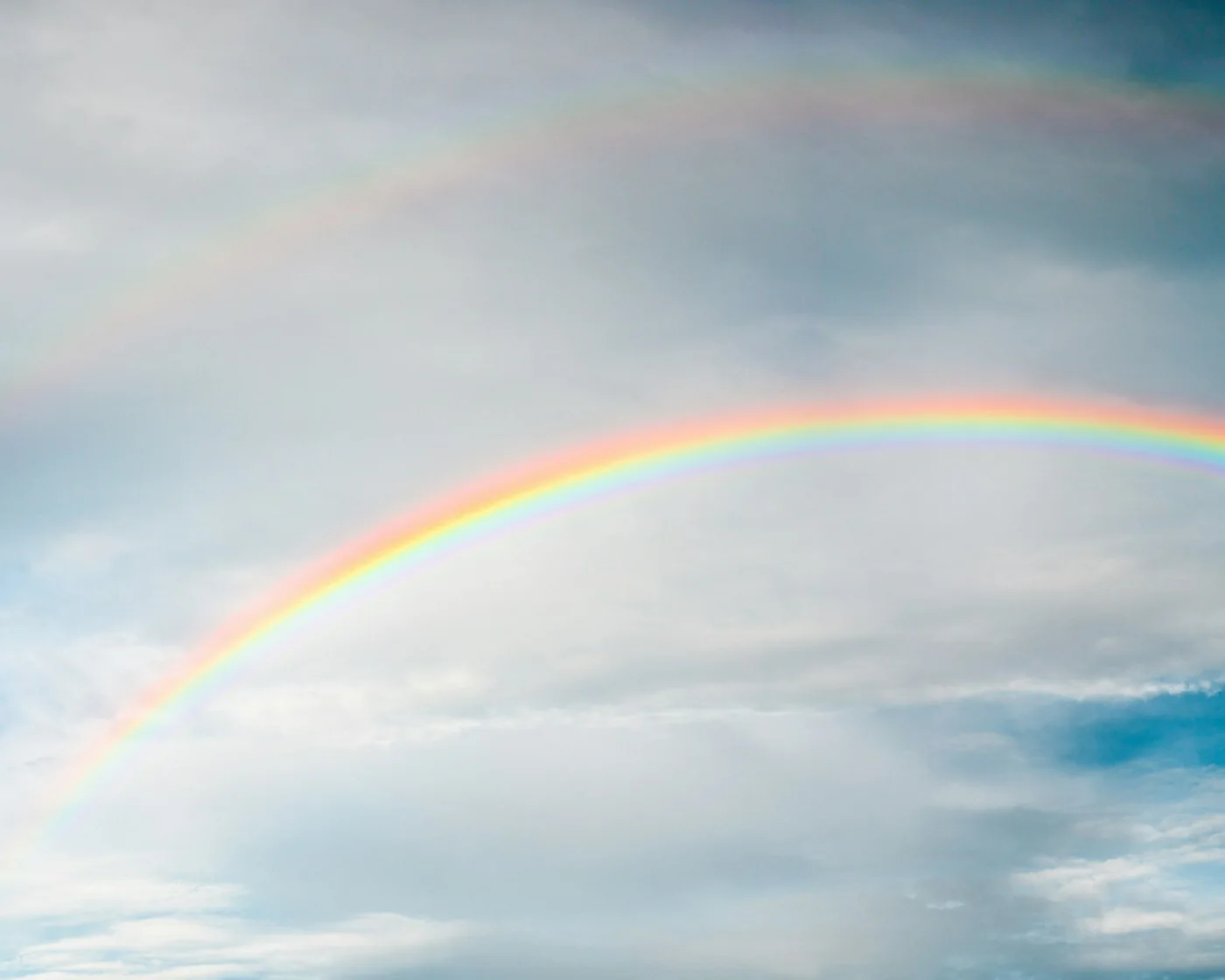
The primary bow comes from one internal reflection. A second reflection can produce a fainter secondary bow outside it, with the order of colors reversed. A rainbow's full geometry is circular, although the ground usually hides much of that circle from an observer standing on land. It is not necessary to see every color clearly to recognize the phenomenon.
Those details invite careful looking. A faint outer arc can be easy to miss when attention is fixed on the brightest band, especially when a phone screen becomes the only way of viewing the scene.
Try describing before photographing
The next time a bow appears, take a few seconds to notice the scene with your eyes. Where is the Sun relative to your shoulders? Is the bow set against dark cloud or a brighter patch of sky? Does the outer edge seem warmer or cooler in color? Then take a photograph from the same spot and compare the picture with your notes.
Keep the exercise simple and stay on a safe public path. There is no reason to cross a road, enter a field, or approach a storm to improve the composition. An imperfect view is enough to make a useful observation.
A good lesson in perspective
Imagine two people looking toward the same shower from different windows. They can agree that they saw a rainbow without having received the same rays of light from the same droplets. That is a helpful way to think about perspective: a shared event need not produce an identical view.
It also changes the kinds of questions worth asking about a photograph. Instead of trying to locate the bow as though it were a building, ask where the photographer stood and where the light came from. The picture becomes a record of a relationship among observer, weather, and illumination. That relationship is the real subject, and it can be noticed without special equipment or a dramatic landscape.
Sources & further reading
Source links provide context for this original feature. Illustration is not documentary evidence of a specific event.